Your First Aesthetic Consultation: How to Prepare and What to Ask
You may know exactly what you would like to discuss. You may simply feel that something has changed and want help understanding your options. Either is a reasonable starting point for an aesthetic consultation.
You do not need to arrive with a treatment name, a shopping list or a decision already made. Preparing a few notes can help you explain what matters to you and leave with a clearer understanding of the choices available.
At Mona Aesthetics in Central Leeds, the consultation appointment is described as a face-to-face discussion of your concerns, medical history, expectations and treatment suitability. This guide focuses on what you can do before and during that conversation.
Start with your concern in your own words
Try writing two short sentences before your appointment:
“I would like to understand…”
“I would like to keep…”
For example, you might want to understand a change in your facial profile while keeping the features that make your face familiar to you. Or you may want advice about skin appearance without knowing whether an injectable treatment is relevant.
These notes do not need to sound clinical. A description such as “I notice this most when I smile” can be a more useful opening than choosing a procedure from a social-media post.
If you bring reference images, explain which detail interests you. Use them as conversation prompts, rather than an instruction to reproduce someone else's appearance. Include what you would dislike as well as what you hope to achieve.
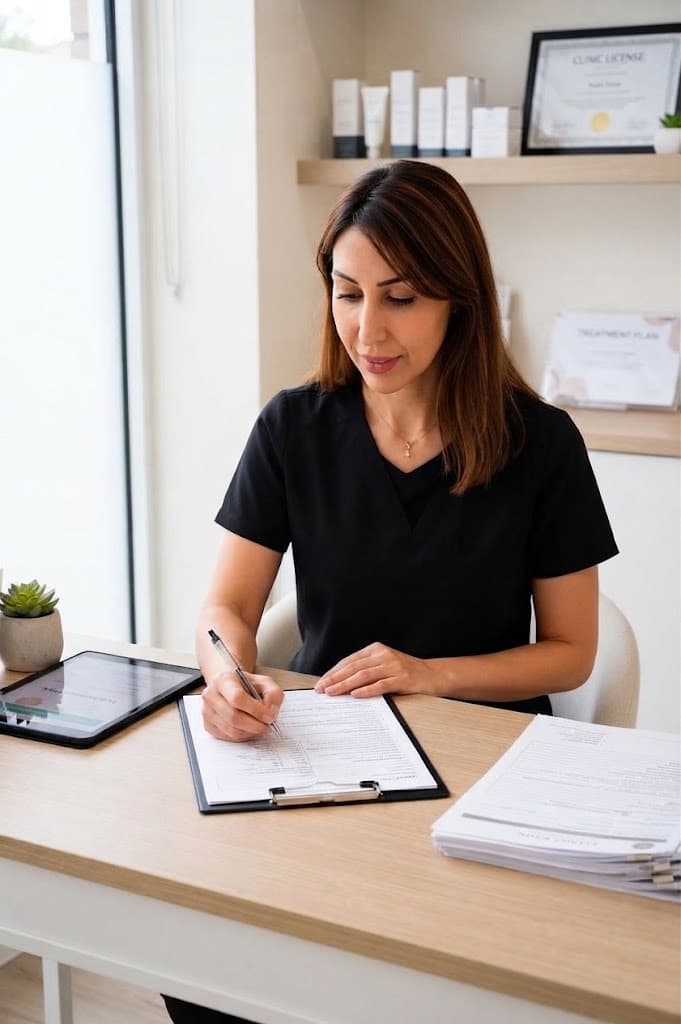
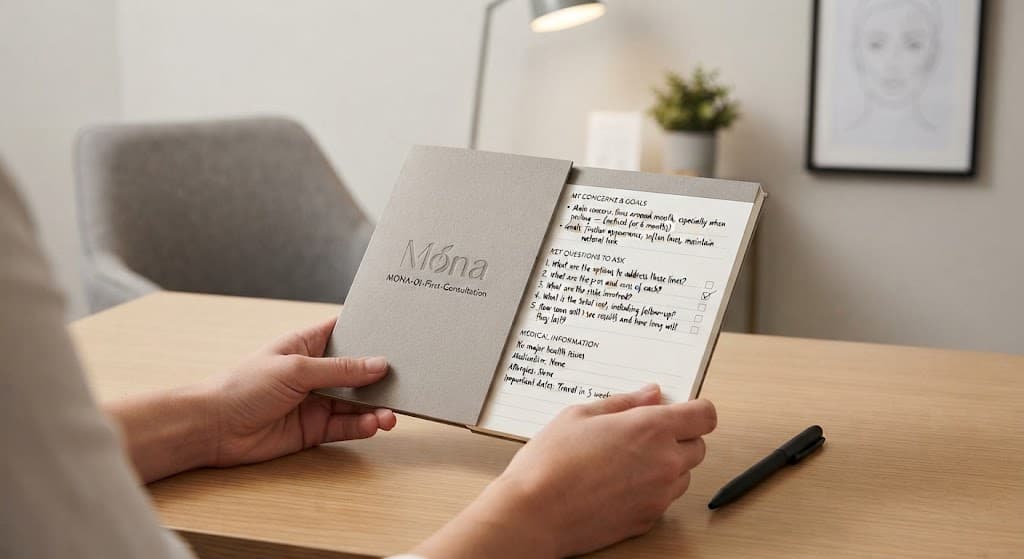
Make a short preparation note
Keep the information in one place so that you are not searching through messages during the appointment. A useful note can include:
- Your main concern and how long you have noticed it.
- Any previous aesthetic treatments, including approximate dates if exact dates are unavailable.
- Your current medical information and questions you want to raise about it.
- Important upcoming events, travel or other commitments you would like to discuss.
- Your practical budget and whether you want to consider options gradually.
Bring information you already have. You do not need to turn your preparation into a personal diagnosis. Relevant medical history and expectations belong in the consultation discussion, where their significance can be assessed. The GMC's guidance on cosmetic consultations discusses these as important parts of assessing a requested intervention.
If you need help with communication, access or attending comfortably, ask the clinic about arrangements before you travel. You can find the clinic's location and contact route on the visit page.
Ask for explanations you can use afterwards
It is easy to nod along to unfamiliar language and then realise, on the journey home, that you are unsure what was proposed.
When a term is new to you, pause the conversation. You might ask:
“What does that mean for the concern I came in with?”
“Which part of the plan addresses my main priority?”
“What remains uncertain at this stage?”
Before discussing the finer details, make sure you understand the proposed direction. Is the recommendation to consider a treatment, gather more information, seek another opinion or leave things as they are for now?
If several options are discussed, ask for them to be explained separately. A simple comparison is easier to remember than a long list of treatment names.
Make the decision manageable
You can divide your notes into three headings: what I understand, what I still want to ask, and what I am ready to decide.
For example, you might understand the purpose of a proposed treatment but still want more information about recovery or the total cost. That is a useful outcome from a consultation: you have identified the next question rather than rushed past it.
The NHS advice on considering a cosmetic procedure encourages research, questions and time to think before proceeding. You can leave without booking treatment if you are not comfortable with the decision.
Questions to answer before you leave
Keep this short checklist with your appointment notes:
- 1Can I explain the recommendation in my own words?
- 2Have I discussed the benefits, limitations and risks that matter to me?
- 3Do I understand the costs and what would happen next?
- 4Do I know how to ask a follow-up question?
- 5Have I had the time and information I need to consider my decision?
If filler becomes one of the options discussed, use a treatment-specific checklist as well. The dermal filler service page explains the consultation areas offered at Mona Aesthetics.
A few common questions
What if I do not know which appointment to choose?
Start with the concern you want to discuss when contacting the clinic. You can ask which consultation option fits that conversation before making a booking.
Should I write my questions down?
Yes, if it helps you. Put your most important question at the top and leave room to record the answer. A short, personal list is easier to use than a long checklist that does not reflect your priorities.
Does a consultation mean I have committed to treatment?
No. Mona Aesthetics' consultation information explains that treatment may not be recommended. An appointment is an opportunity to understand your options and decide what feels appropriate after the discussion.
Plan your first conversation
Bring your questions, including the ones you are not sure how to phrase. The aim is to leave understanding the next step and the reasons for it.
Begin Your Consultation at Mona Aesthetics
Book an unhurried, face-to-face aesthetic consultation with Mona in Central Leeds to discuss your concerns.
This guide provides general information to help you prepare for a consultation. It does not assess your suitability for a treatment.
Related Patient Guides
Before Dermal Filler Treatment: 10 Questions Worth Asking
Considering dermal fillers? Use ten practical consultation questions to discuss suitability, products, risks, costs, aftercare and realistic expectations.
Had Filler Before? How to Prepare for a Consultation About Your Results
Concerned about previous dermal filler? Learn what records to bring, how to explain changes and what to discuss at an assessment at Mona Aesthetics in Leeds.